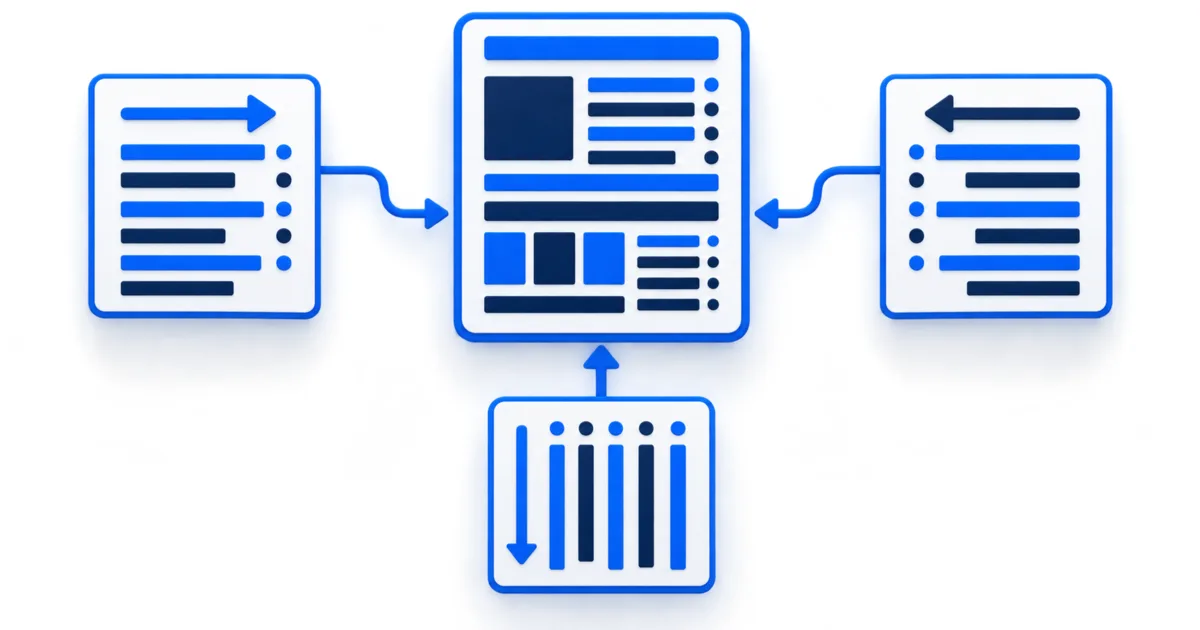
Separate script, language, and reading order
A writing system is not the same as a language, and recognizing both does not prove that lines were read in the correct sequence. A single image can combine Arabic or Hebrew text with Latin model codes, Chinese characters with a Latin brand name, or accented text with an unaccented web address. Inventory the visible regions first. Record the script, direction, and purpose of each region before combining them into one transcript.
Review questions for mixed-script images| Visible feature | Question to answer | Evidence to preserve |
|---|
| Right-to-left line with a phone number | Where does the number belong in the sentence? | The complete line, punctuation, and surrounding label. |
| Vertical caption beside horizontal text | Is the caption read before, after, or independently? | A full layout view plus separate close crops. |
| Small marks above or below letters | Do they change the word, grammar, or a person’s name? | The original spelling at a scale where every mark is visible. |
| Name written in two scripts | Is one form a translation, transliteration, or official spelling? | Both forms and the document context in which they appear. |
Build a name record instead of guessing
Names often need different handling from ordinary sentences. Keep the source spelling, any printed Latin form, and the context that identifies the person, place, organization, or product. If an identity document or organization supplies an established spelling, use that form rather than generating a new one. If no authoritative form is available, label a phonetic rendering as transliteration and keep it separate from a literal explanation of meaning.
When direction or annotation remains uncertain, translate regions separately. Do not join fragments merely because they form a plausible sentence. The guides for right-to-left image text and Chinese, Japanese, and Korean image text give script-specific capture and reconstruction checks.
A safe handoff includes the source form
Give the reviewer the original image, the region map, the corrected source transcription, and the translation. Mark any inferred line order. For names, codes, addresses, citations, or quoted wording, retain the source characters beside the translated explanation. This makes uncertainty visible and lets another reader correct one field without rebuilding the whole page.