Choose the result before choosing the workflow
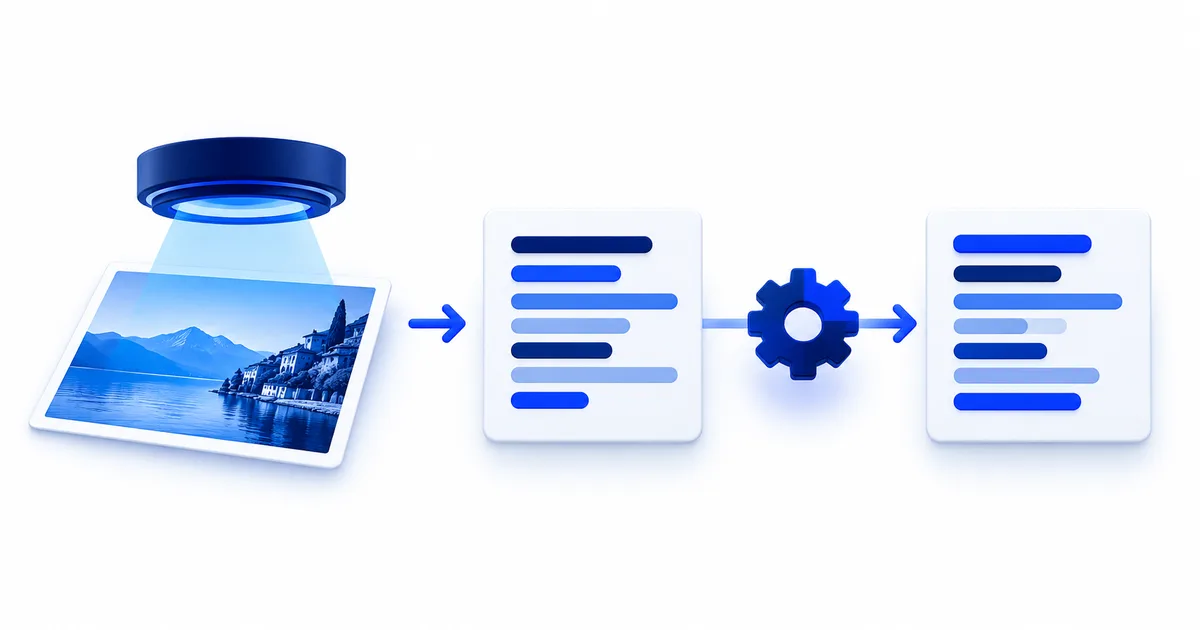
Image translation can produce several different deliverables, and they are not interchangeable. A searchable transcript records the source-language characters. A translation explains meaning in another language. A rebuilt document adds layout work after the text has been verified. Decide which result you need first, because every extra transformation introduces another place where information can move, disappear, or look more certain than the source allows.
Evidence required for common image translation outputs| Needed result | Records to keep | A useful completion check |
|---|
| Copyable source text | Original image and corrected OCR text | Every important character and line break has been compared with the image. |
| Translation for understanding | Original image, corrected source text, and translated text | Names, numbers, warnings, units, and negative words agree across all three records. |
| Translated layout | All three records plus a separate editable design | The design has been checked for reading order, clipped text, misplaced labels, and altered emphasis. |
A practical review example
Consider a photographed shop notice containing a business name, opening hours, a temporary closure date, and a phone number. OCR may recognize most prose correctly while confusing one digit in the date. Translation can then turn the surrounding sentence into natural English without revealing that the date is wrong. The fluent sentence is not the evidence. The pixels and corrected source transcription are.
Review the notice by field. Leave the business name in its established form unless a verified translation is needed. Compare every digit and punctuation mark in the hours, date, and phone number. Confirm which line the temporary condition modifies. Only then evaluate the translated sentence. The field-level OCR confidence method explains how to record confirmed, plausible, and unreadable fields without relying on one page-level score.
What a reviewable result should contain
- The untouched source image or an approved privacy-safe working copy.
- The extracted source text with visible corrections, rather than a translation alone.
- A clear marker for any unreadable field instead of a guessed replacement.
- The intended use, because casual orientation and official submission require different review.
- A separate production step when text must be placed back into the image.